Role
Senior Product Designer
Team
PM, Engineering, Operations, Partner Success
Brands
NoBroker Packer & Movers
Platforms
Mobile + Desktop
Transforming Moving Services into a Connected Ecosystem
Designing a relocation operating system across customers, partners, and operations
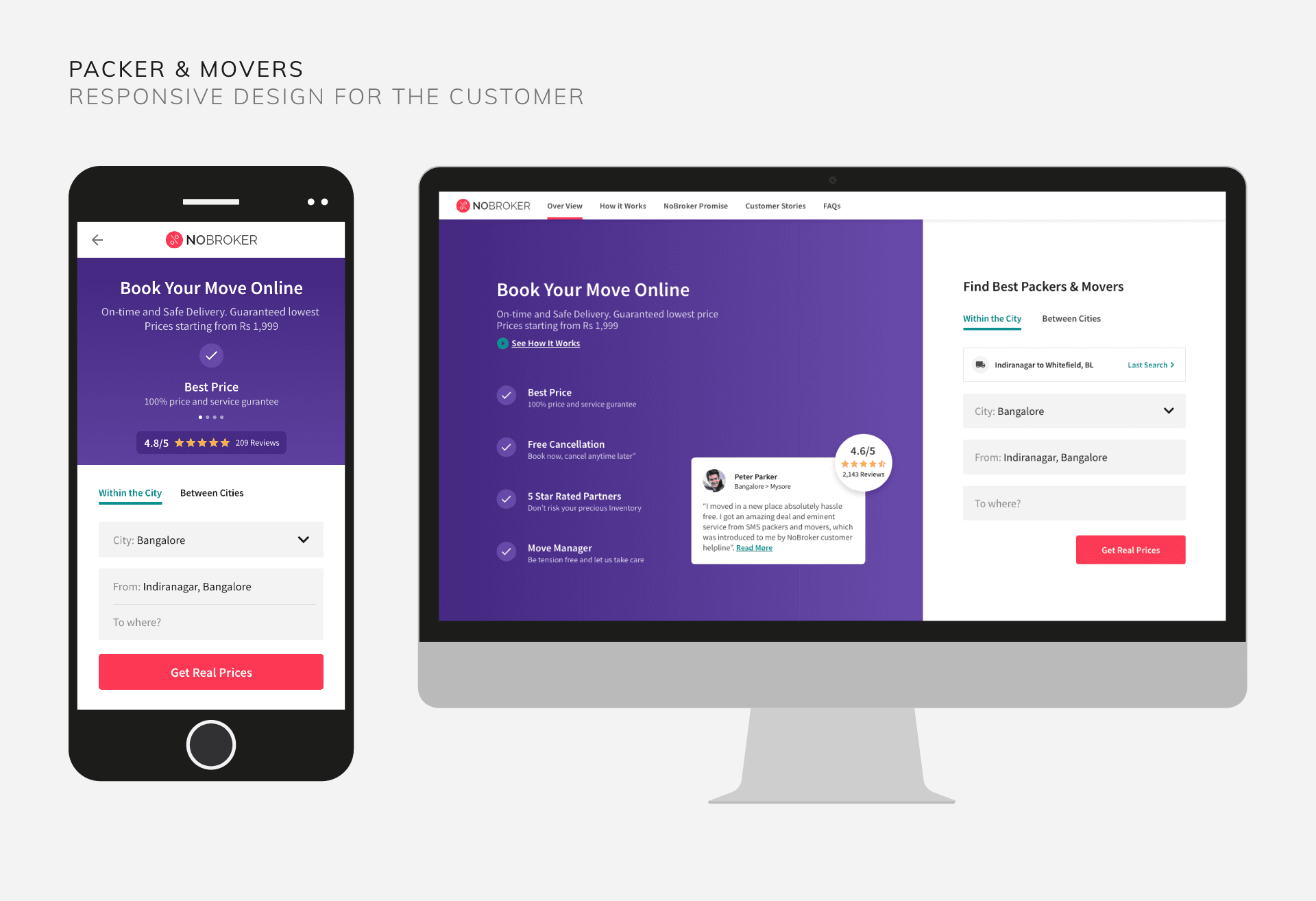
Overview
Moving homes is a high-stakes experience.
Unlike ordering food or booking a cab, relocation involves:
• Large financial commitment
• Multiple service providers
• Schedule coordination
• Uncertainty and trust concerns
Users often worry about:
• Hidden charges
• Damaged goods
• Missed timelines
• Lack of visibility
The existing experience focused primarily on lead generation rather than helping users confidently complete a move.
My goal was to redesign the ecosystem to create trust, transparency, and operational efficiency across the entire relocation journey.
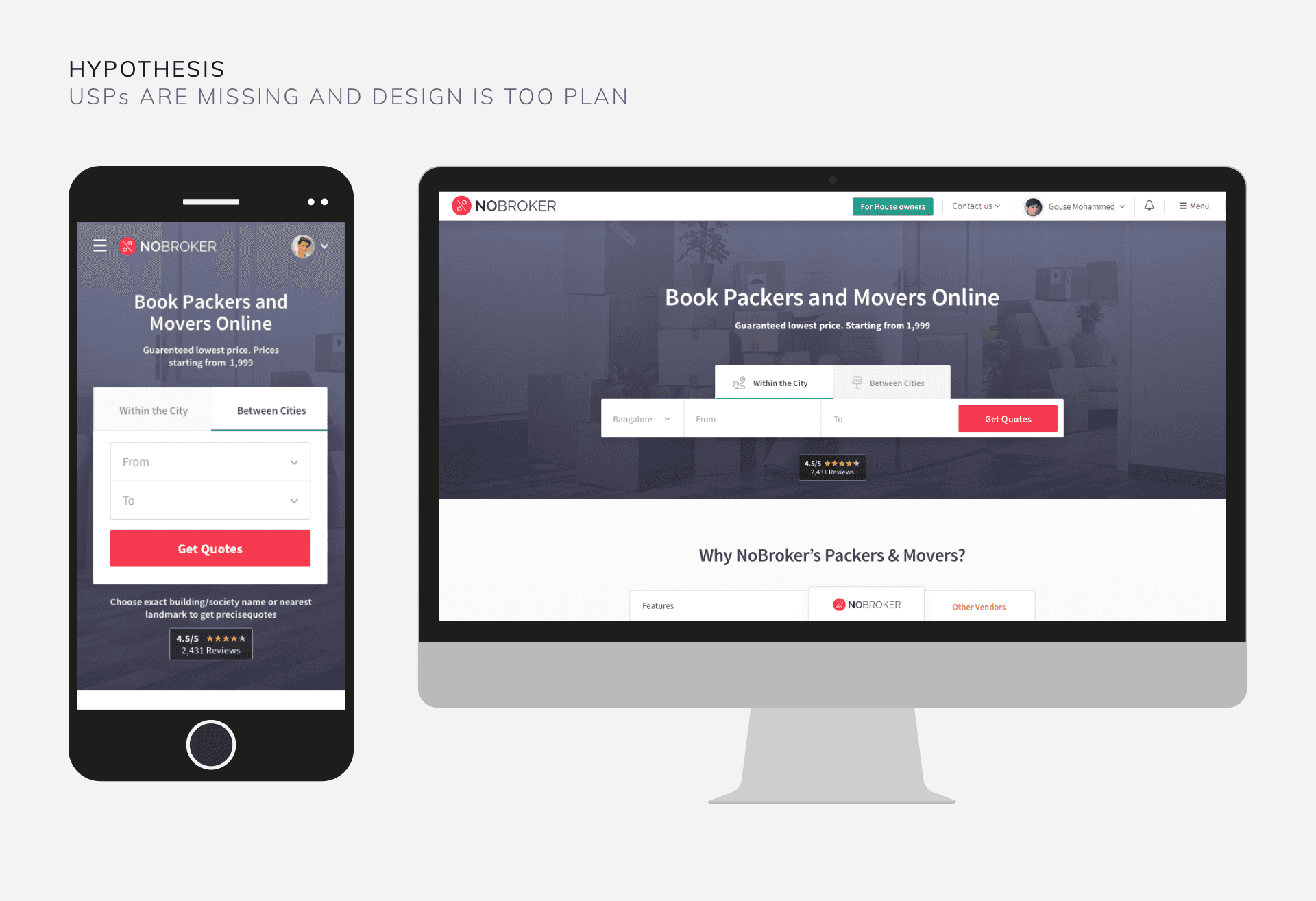
Problem
Research revealed three major issues.
User Problems
• Unclear pricing
• Low trust in service providers
• Limited visibility after booking
• Anxiety during move day
Partner Problems
• Poor lead quality
• Missing customer information
• Inefficient scheduling
Operations Problems
• Manual coordination
• High support volume
• Limited visibility into move status
The challenge was not just improving a booking flow. It was redesigning the service ecosystem.
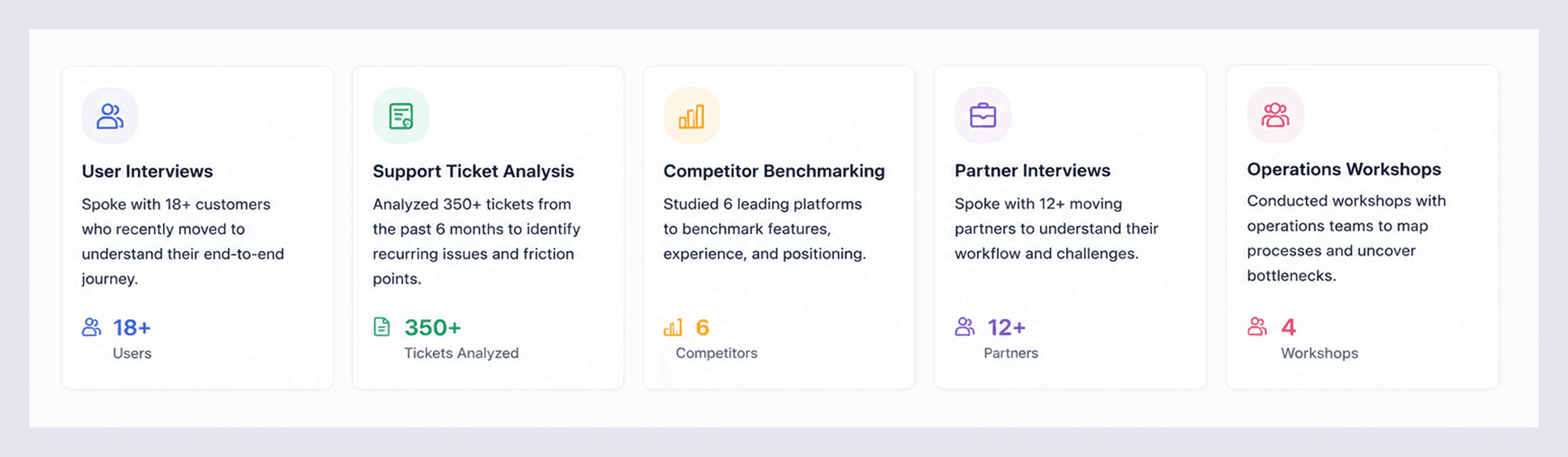
Research
Methods:
• User interviews
• Support ticket analysis
• Competitor benchmarking
• Partner interviews
• Operations workshops
Key Insights
Users buy confidence, not transportation
Customers were less concerned about vehicle availability and more concerned about:
• Trust
• Safety
• Predictability
Pricing uncertainty creates drop-offs
Users frequently abandoned the process when they felt final costs were unclear.
Operations teams act as invisible glue
Many successful moves depended on manual intervention by internal teams.
This indicated systemic design opportunities.

Opportunity Areas
From the research, I identified four strategic opportunities.
Build trust before booking
Improve quote transparency
Increase move visibility
Reduce operational dependency
Experience Vision
I defined the future experience around a simple principle:
Make relocation feel predictable.
Customer Experience
Design Decisions
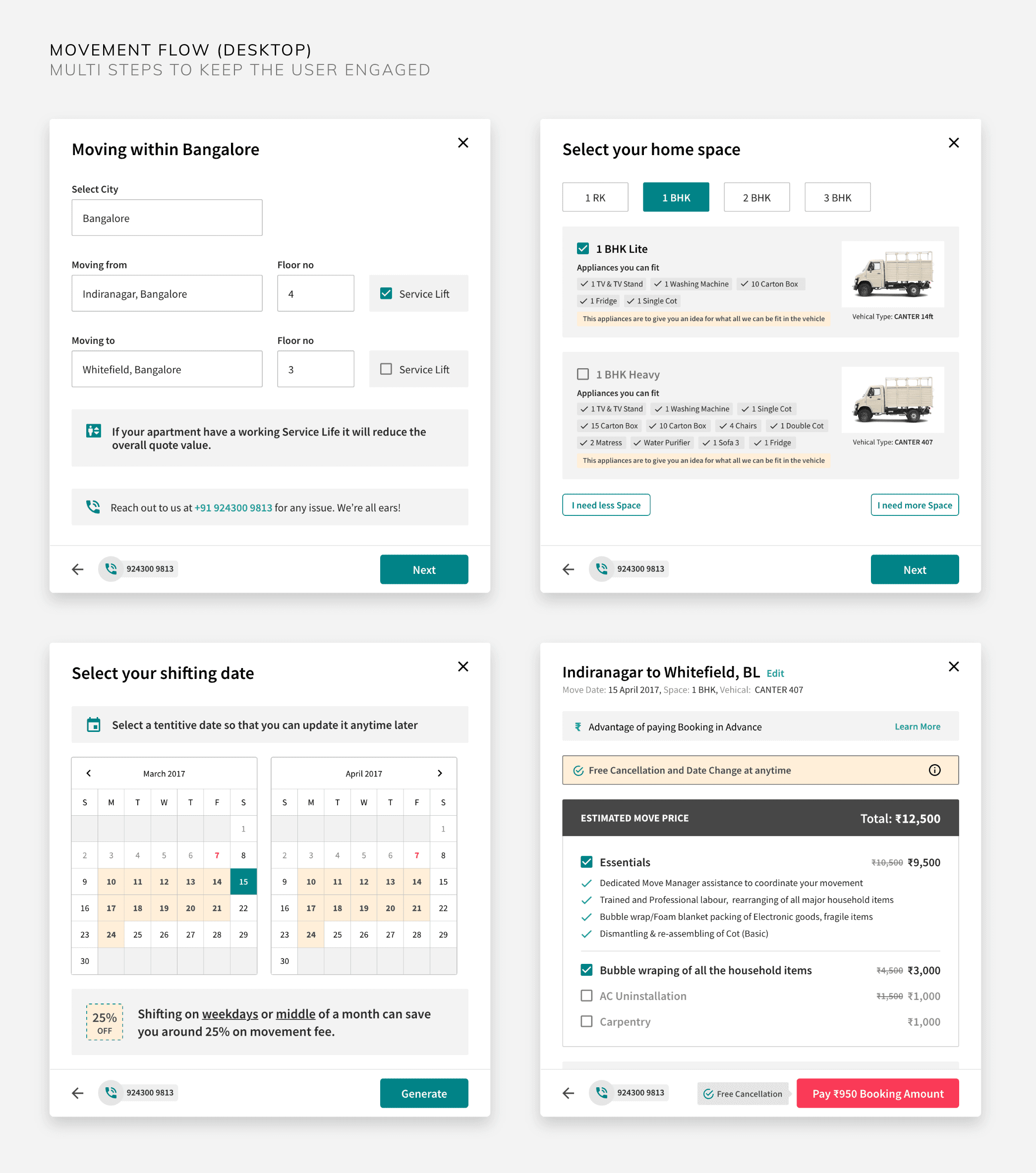
Progressive information capture
Reduced cognitive load by collecting only necessary information at each stage.
Transparent pricing
Introduced clearer quote structures and expectations.
Relocation timeline
Created a step-by-step journey that helped users understand what would happen before, during, and after the move.
Trust signals
Integrated verification indicators, ratings, and service assurances.


Partner Experience
Challenge
Partners struggled with incomplete information and inefficient workflows.
Solution
Designed a partner experience that enabled:
• Lead qualification
• Quote management
• Schedule coordination
• Move status updates
Impact
Partners could respond faster and manage capacity more effectively.

Operations Dashboard
Challenge
Operations teams relied heavily on spreadsheets and manual follow-ups.
Solution
Designed a centralized lead management dashboard providing:
• Lead visibility
• Move tracking
• Escalation management
• Partner coordination
Outcome
Reduced operational complexity and improved service consistency.

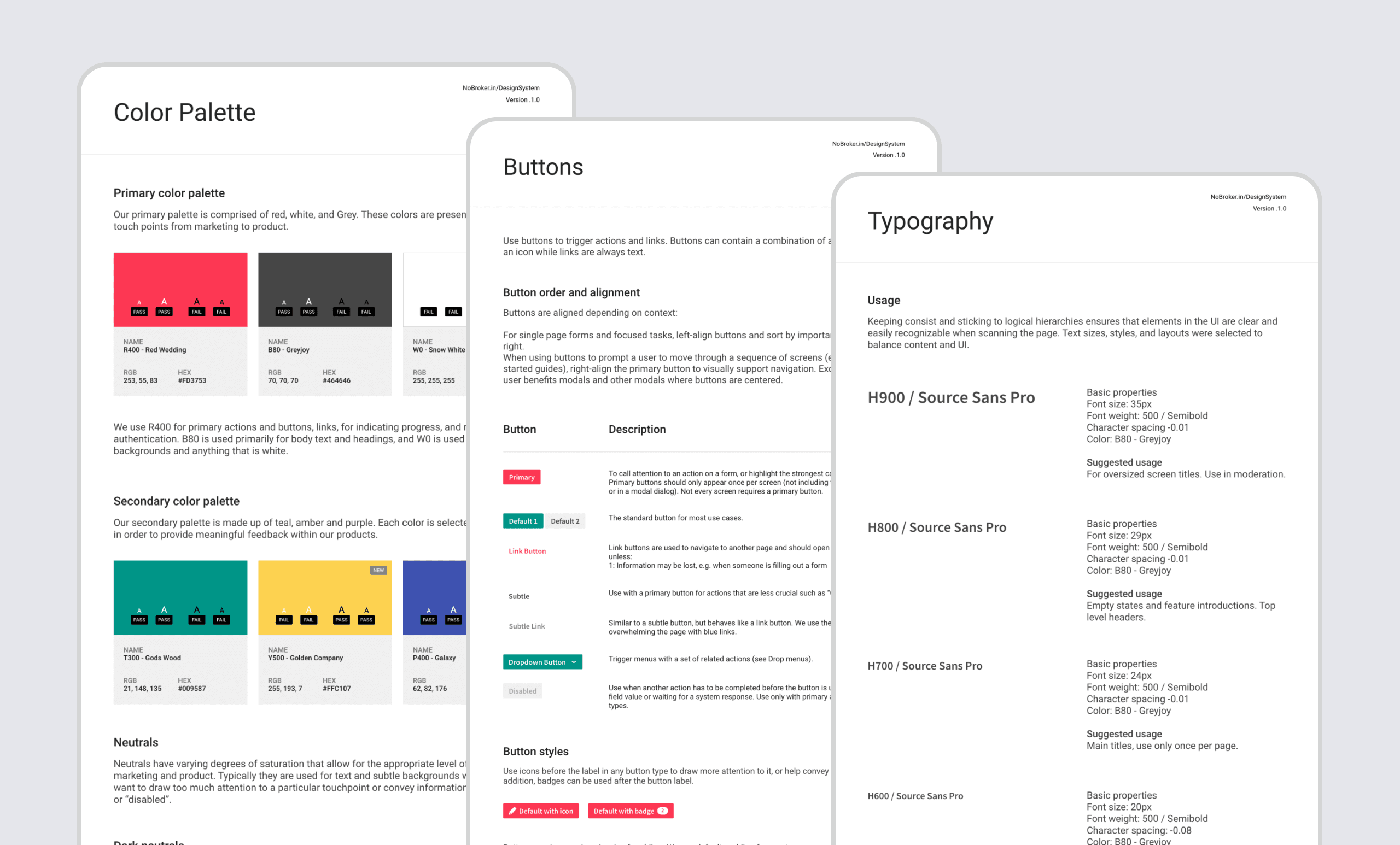
Design System Thinking
To ensure consistency across the ecosystem:
• Shared status framework
• Unified information architecture
• Reusable components
• Consistent service lifecycle states
This enabled customer, partner, and operations experiences to remain synchronized.
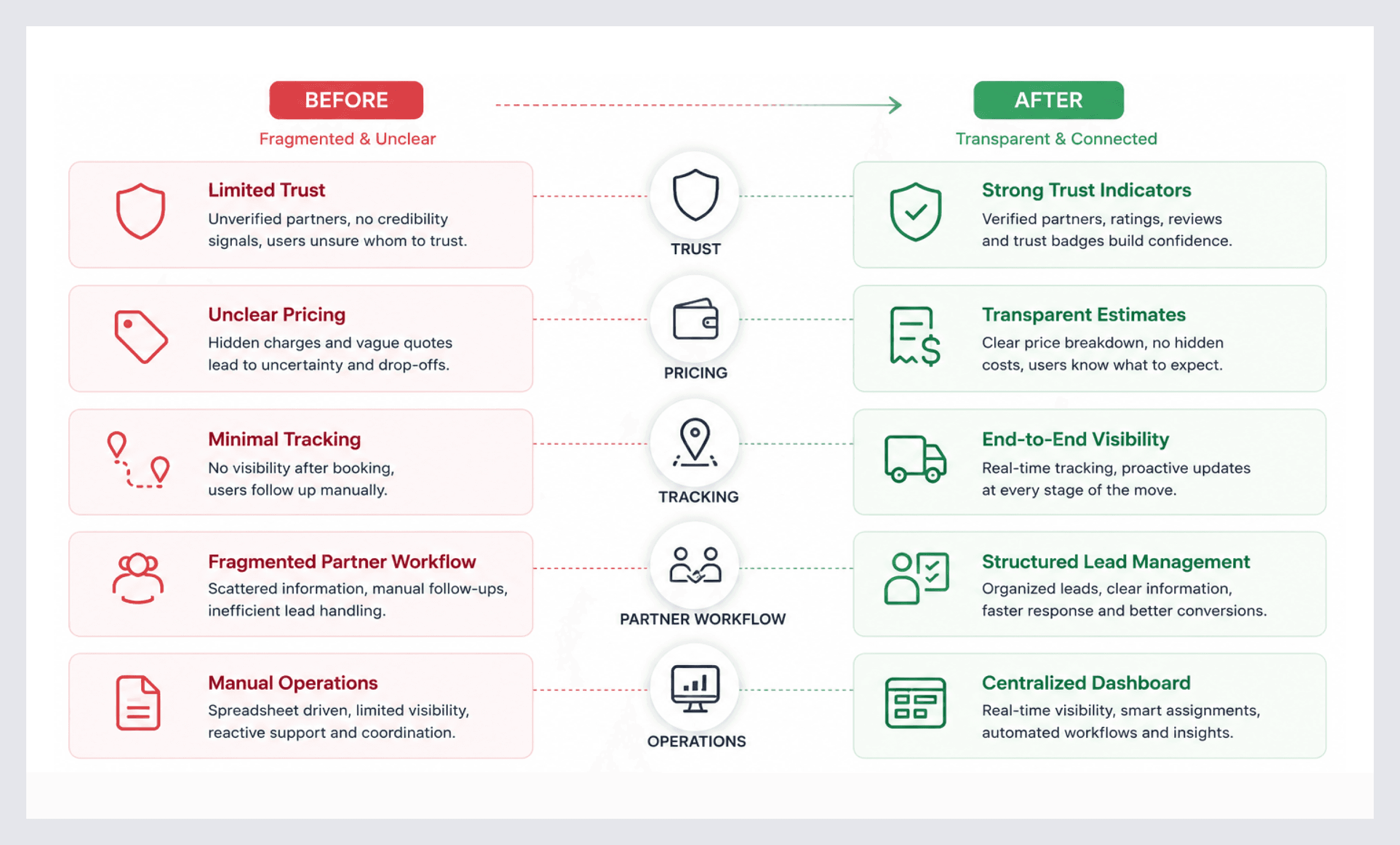
Before vs After
From Fragmented Moving Processes to a Unified Relocation Operating System