Role
Design Systems Architect & Product Designer
Scope
Multi-brand platform design infrastructure
Brands
Junglee Poker & PokerStars
Platforms
Mobile + Desktop
OASIS — Multi-Brand Design Infrastructure for Poker Gaming
A token-driven design system built to support multiple poker platforms across mobile and desktop while handling complex gameplay states.
The Problem
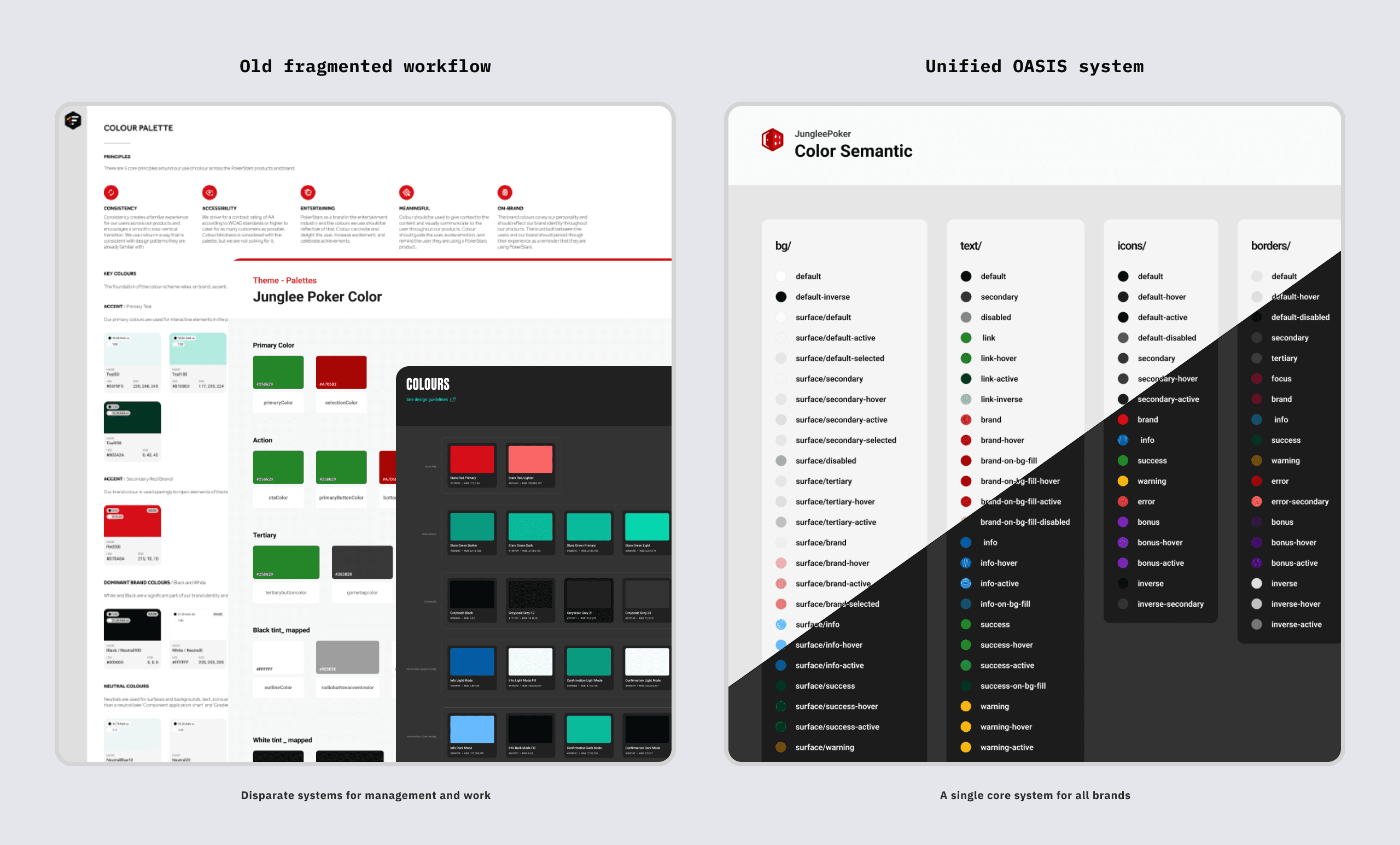
The product ecosystem contained two brands with similar functionality but different visual identities.
Key issues included:
• Duplicate Design Work
• Every feature needed to be redesigned separately for each brand.
• Inconsistent Components
• UI components evolved independently across teams.
• Slower Feature Rollout
• Design work multiplied across brands and platforms.
• Gameplay Complexity
Poker introduces unique UI challenges such as:
• Multiple player layouts
• Betting states
• Real-time timers
• Dynamic chip stacks
• Tournament progress states
A traditional component library would not be enough. We needed a design infrastructure capable of scaling across brands and gameplay states.
Design Goals
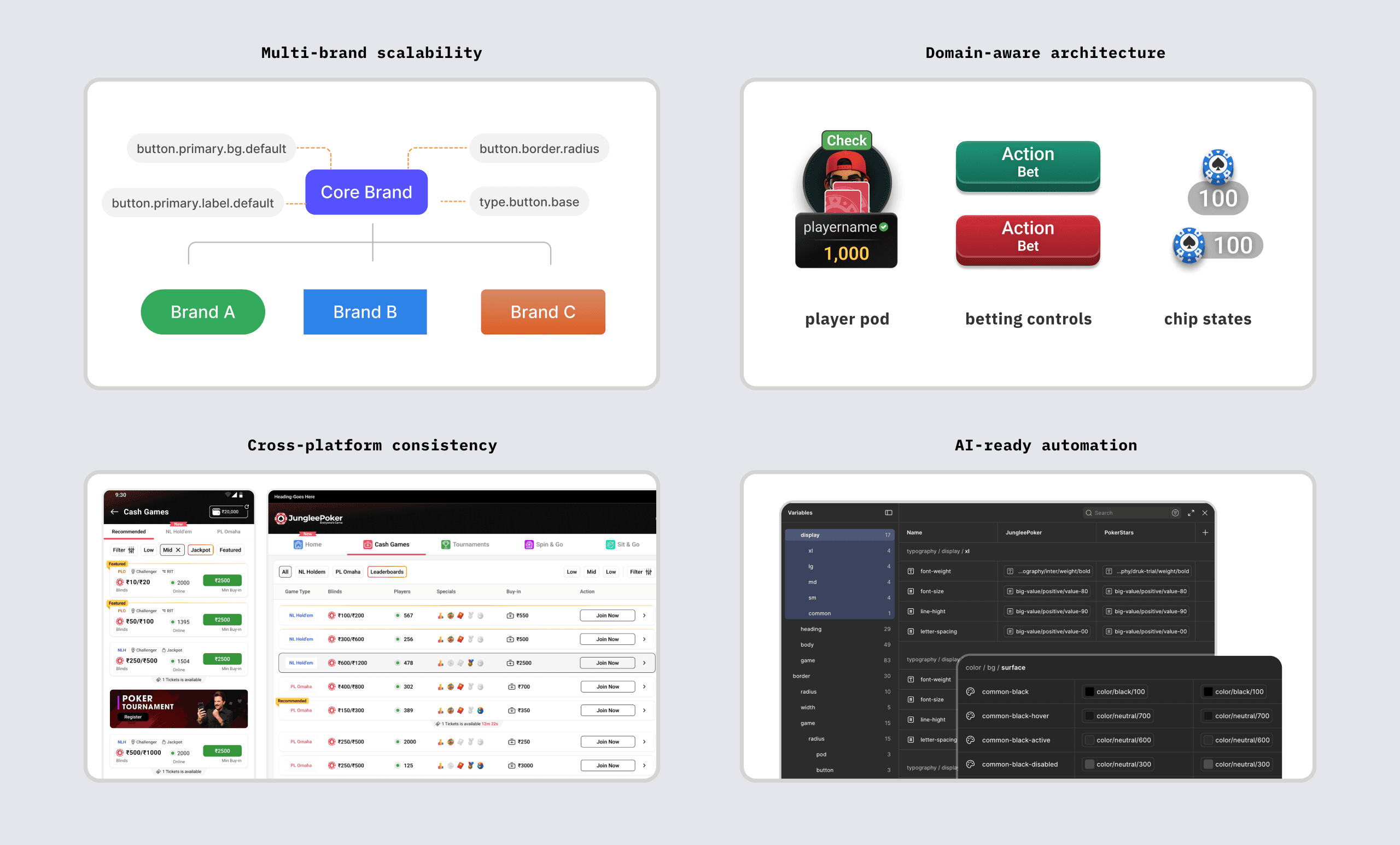
The system was designed around four primary goals.
1. Multi-Brand Scalability
Enable multiple poker brands to share the same design infrastructure.
2. Domain-Aware System Architecture
Support poker-specific gameplay components and interactions.
3. Cross-Platform Consistency
Allow the same system to power both mobile and desktop environments.
4. Future-Ready Automation
Structure tokens and components in a way that could support future AI-assisted workflows.
Strategic Approach
Instead of building a UI kit, we built a layered design architecture.
The system separates:
• visual primitives
• semantic meaning
• gameplay logic
• brand identity
This layered approach allowed the same components to render different brand experiences without duplication.

System Architecture
OASIS is structured across five layers.
Layer 1 - Core Foundation
At the base of the system is a composable numeric scale used for:
• hex values
• spacing
• typography rhythm
• elevation
• border radius
• shadow composition
Instead of hardcoding values like 4px or 16px, spacing tokens are derived from a
consistent scale.
This ensures proportional rhythm across the entire system.

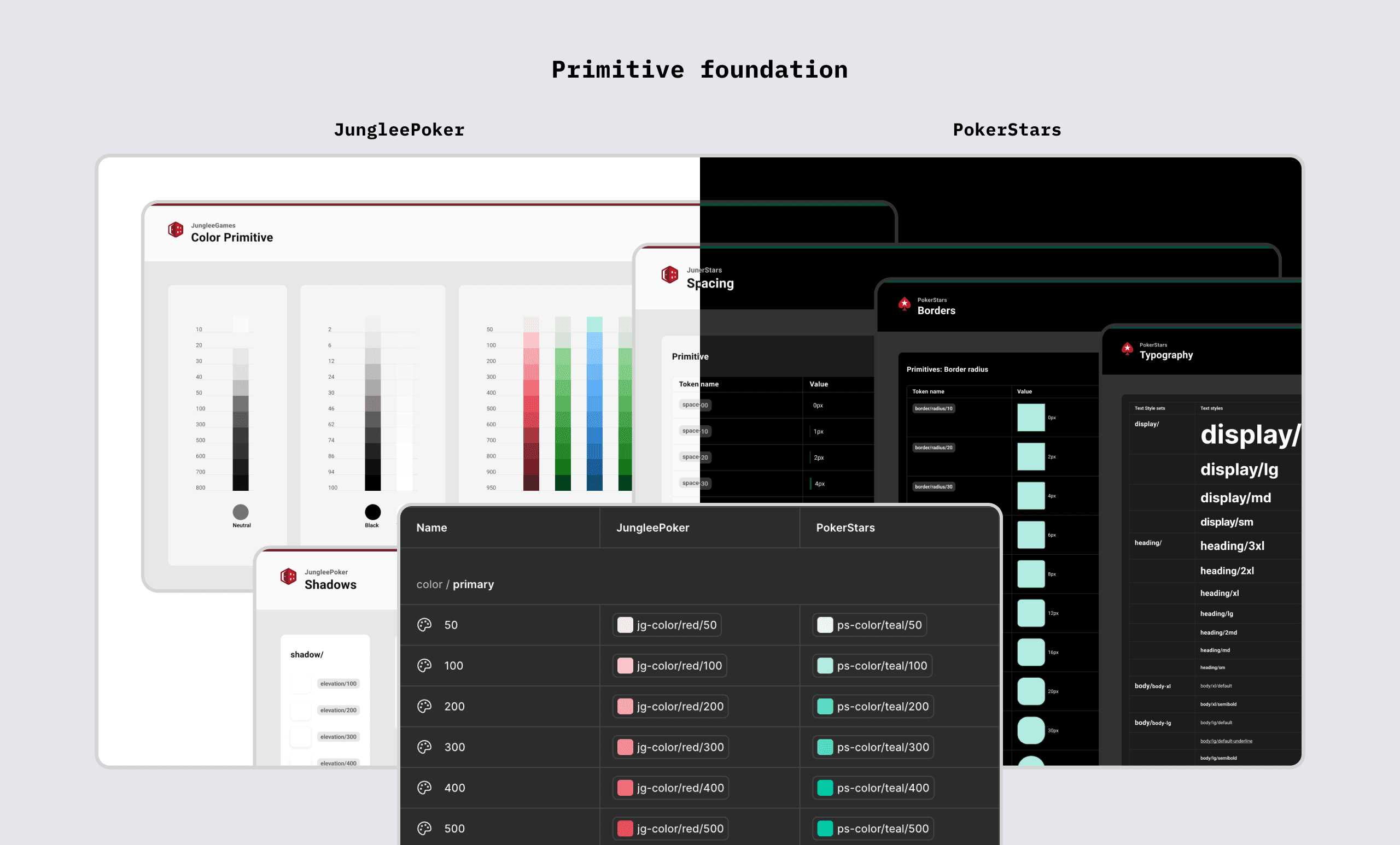
Layer 2 - Primitive Tokens
Primitive tokens define brand-neutral design values:
• base color palette
• typography scale
• spacing
• border radius
• shadow structure
At this layer, tokens contain no product or brand context.
This ensures the foundation remains stable even when brand styles change.
Layer 3 (A) - Semantic Tokens
Primitive tokens are mapped to semantic meaning.
Examples include:
• surface/primary
• text/strong
• border/subtle
• button/background
• card/elevation
Components reference semantic tokens rather than raw values.
This abstraction allows brand styling to change without breaking component structure.

Layer 3 (B) - Domain-Specific Tokens
Poker products require domain-specific UI logic.
To support gameplay interactions, OASIS introduced domain-aware tokens such as:
• table/player-pod
• betting/action
• timer/intense
• card/front
• card/back
• pot/display
This layer connects the design system to product behavior.
It allows gameplay states to be expressed directly through the design infrastructure.
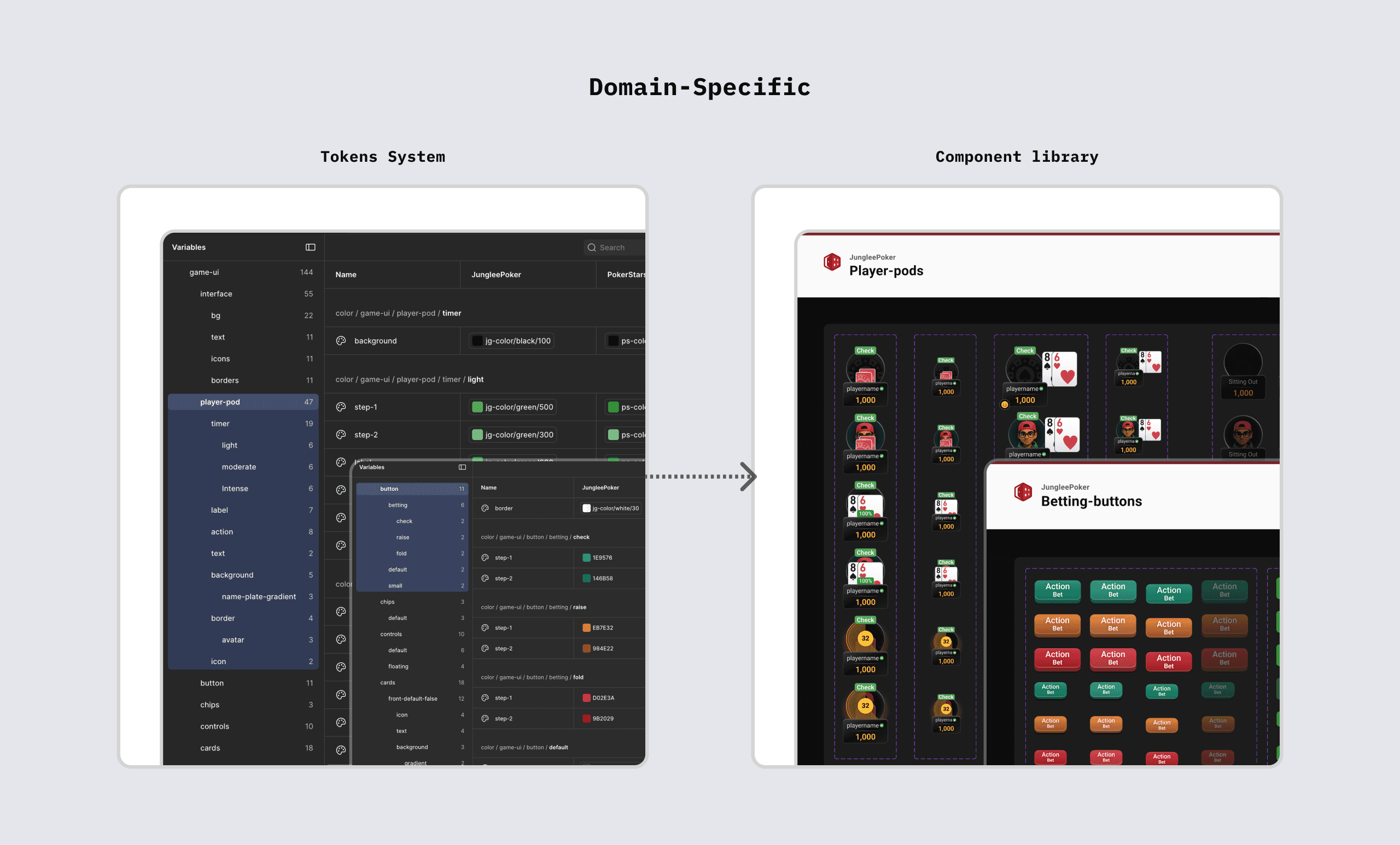
Layer 4 - Brand Mapping
Finally, brand collections map tokens to visual identity.
OASIS supports multiple brand collections:
• JunglePoker
• PokerStars
Brand collections override semantic tokens while leaving structure unchanged.

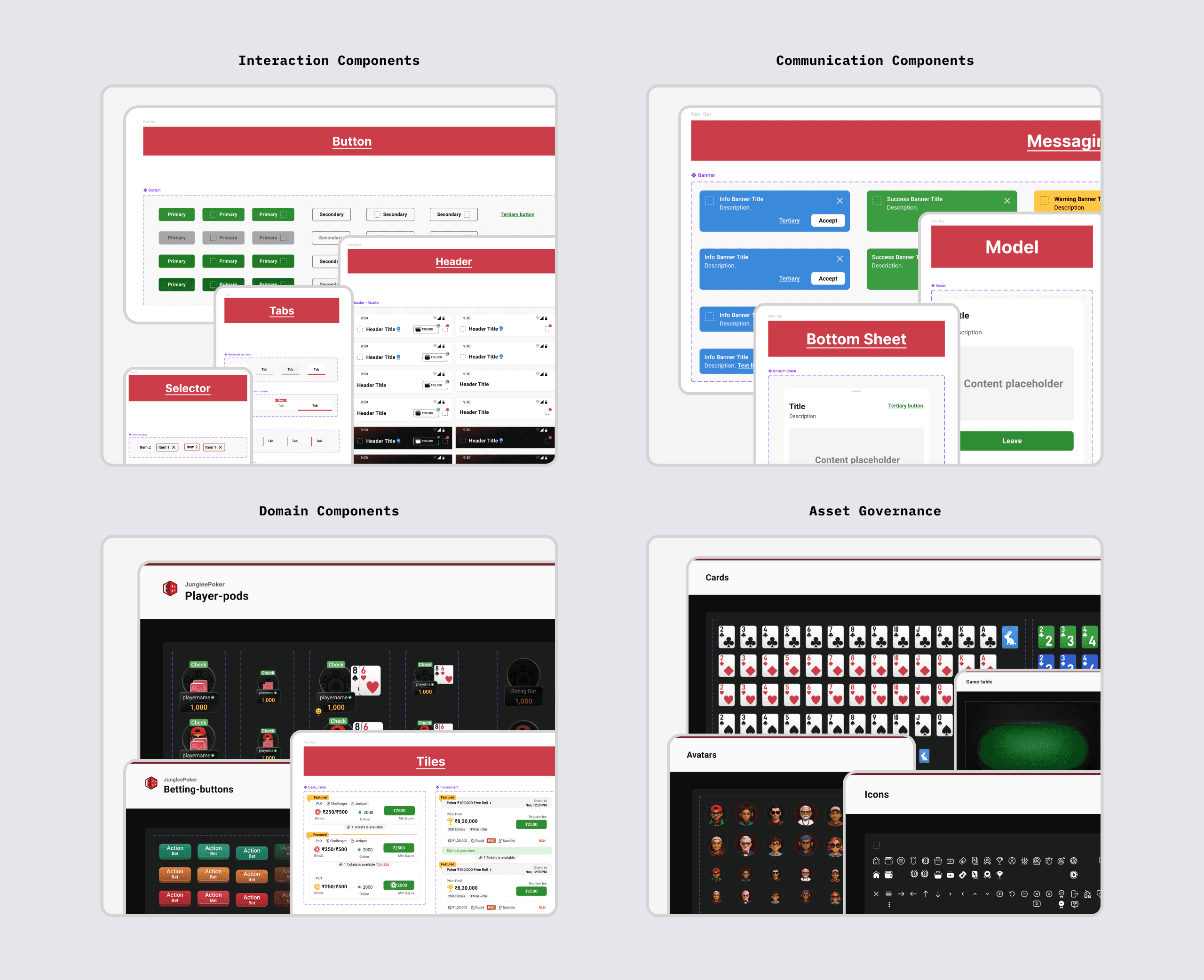
The component library
The system includes 50+ production-ready components, organized into four major groups.
Interaction Components
Finally, brand collections map tokens to visual identity.
Examples include:
• buttons
• tabs
• navigation bars
• selectors
• headers
Each component includes a full interaction state matrix:
Default → Hover → Press → Disabled → Selected
Communication Components
The system also includes structured feedback elements:
• alerts
• banners
• tooltips
• modals
• coach marks
• FTUX flows
These ensure consistent messaging across the product.
Domain Components
Gameplay-specific components include:
• player pods
• betting controls
• chip stacks
• card displays
• tournament tiles
• table layouts
These components reflect the logic of poker gameplay rather than generic UI patterns.
Asset Governance
The system also manages shared assets such as:
• icons
• avatars
• card skins
• table themes
This prevents visual drift across the product.
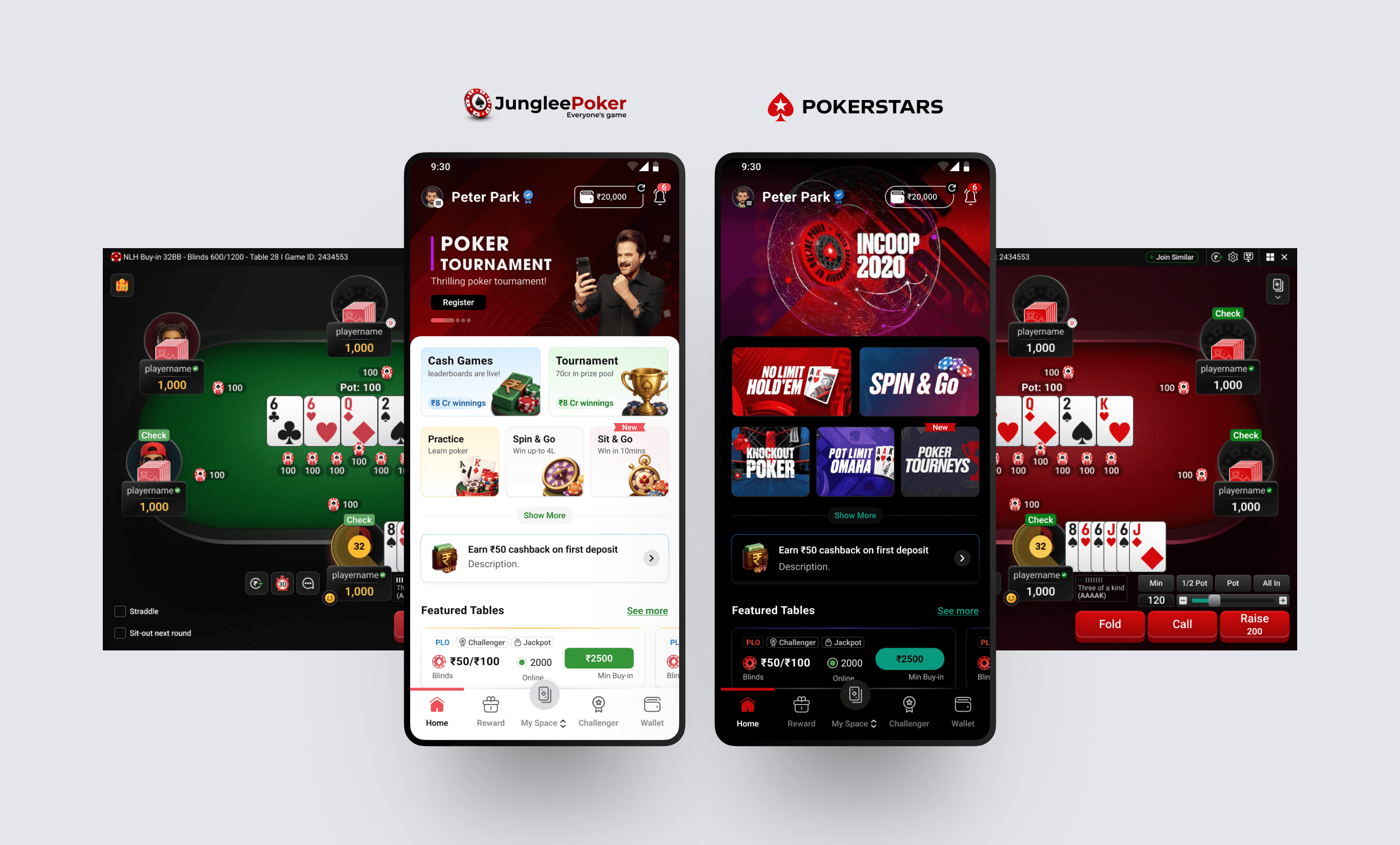
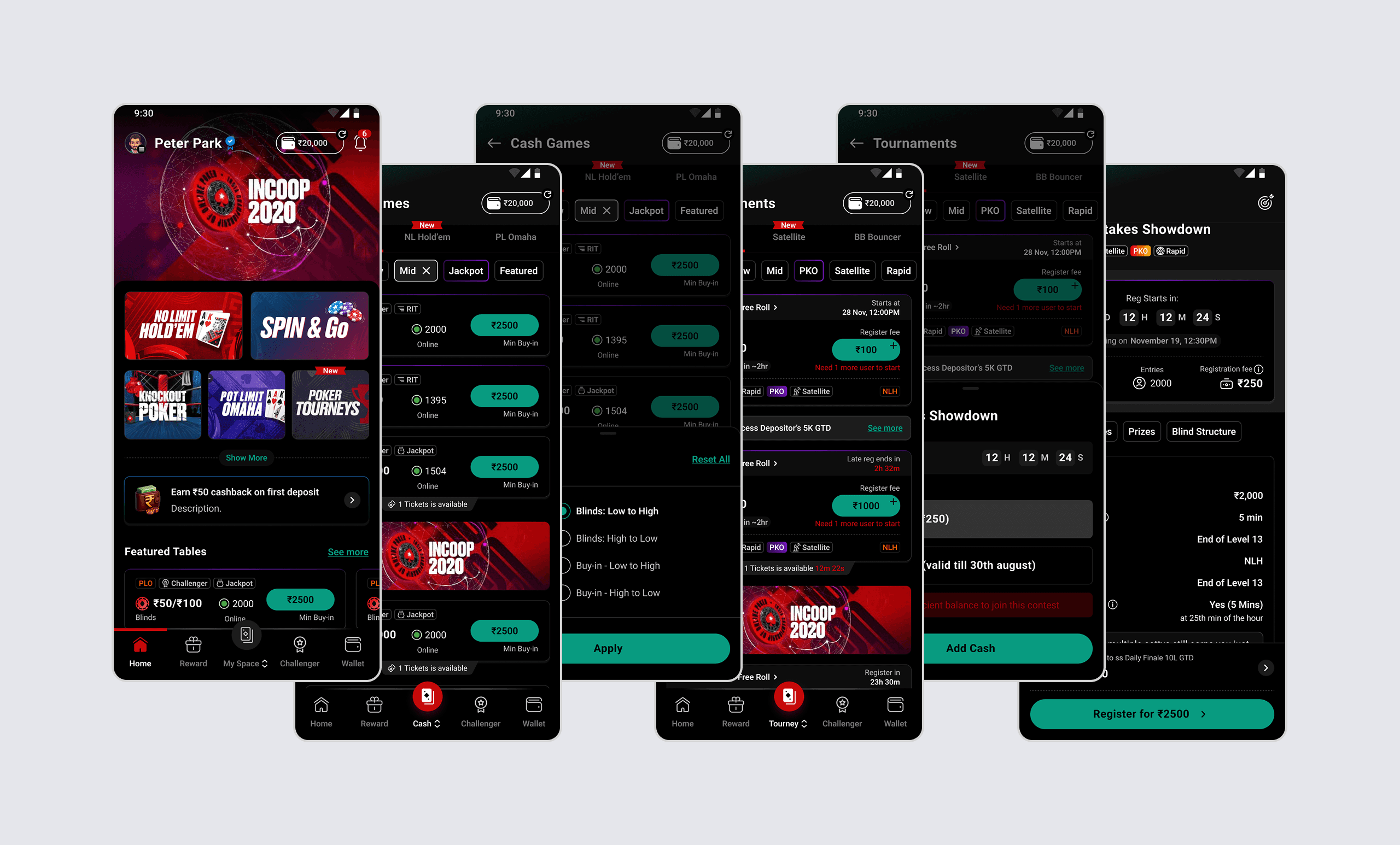
Validation 1 - Mobile Lobby
The first large-scale test of the system was the mobile lobby experience.
The lobby serves as the primary discovery surface where players browse:
• cash games
• tournaments
• featured tables
• practice modes
• promotions
All screens were built entirely using system components.

Validation 2 - Multi-Brand Rendering
After completing the JunglePoker lobby, we rendered the same experience for PokerStars.
Only token collections changed.
Structure remained identical.
This validated the multi-brand design infrastructure.
Validation 3 - Desktop Gameplay Toolkit
The system was further tested in a desktop gameplay environment.
This included:
• 6–9 player layouts
• betting state matrices
• showdown states
• mission overlays
• hand history views
The infrastructure scaled without requiring structural redesign.
